
Last Updated: November 28, 2026
Quick Summary
To choose a wine for dinner, start with the food rather than the bottle: match the wine’s intensity, acidity, and body to the weight and flavors of the main dish. Light dishes like salads and seafood call for light wines such as Sauvignon Blanc, while heavy dishes like steak want full-bodied reds like Cabernet.
- Match wine body to dish weight: light dishes with light wines, heavy dishes with full-bodied wines.
- High-acid wines cut through fat, which is why crisp whites work with fried or buttery food.
- The fat and protein in steak soften a bold red’s tannins, making it taste smoother.
- A standard 750 ml bottle holds about five 5-ounce glasses.
- Plan one bottle for every two to three guests, then add one spare per style.
Table of Contents
- Start With the Food, Not the Wine
- Wine Pairing With Food: Match Intensity, Acidity, and Body
- Pairing Wine With Lighter Dishes: Salads, Chicken, and Seafood
- Pairing Wine With Rich Dishes: Steak, Red Meat, and Sauces
- How to Choose a Red Wine for Your Menu
- How to Choose a White Wine or Rosé
- Best Wine for a Dinner Party: Bottle Count and Guest Preferences
- Wine Serving Temperature, Glassware, and Opening the Bottle
- A Step-by-Step Decision Process for One Dinner
- Let Vino Locale Handle the Pairing for You
- Frequently Asked Questions
Start With the Food, Not the Wine
Most people pick a bottle first and then hope the meal catches up. That is backwards. Learning how to choose a wine for dinner starts with the plate in front of you, not the label on the shelf. At Vino Locale, the European-style wine garden and kitchen in downtown Palo Alto, we know that the guests who enjoy their meal most are often the ones who thought about the food first.
The reason is simple. Food changes how wine tastes. A bright, acidic white that feels crisp on its own can turn flat next to a rich cream sauce. A big red can taste harsh beside a delicate salad. Match the two and both get better.
So before you scan a wine list, answer three questions:
- What is the main dish, and how heavy is it?
- Is the food salty, spicy, creamy, or acidic?
- How strong are the flavors, mild or bold?
Get those answers and the bottle choice gets much easier. Below, we walk through the whole process, from reading a dish to picking a red or white, plus how much to buy and how to serve it.
Wine Pairing With Food: Match Intensity, Acidity, and Body
Wine pairing with food is the practice of matching a wine’s weight, acidity, and body to the flavors and texture of a dish so neither overpowers the other. Three things do most of the work: intensity, acidity, and body.
Intensity means how bold the flavors are. A light dish needs a light wine. A heavy dish needs a wine with enough weight to stand up to it. Serve a delicate sole with a heavy cabernet and the fish disappears.
Acidity is the fresh, tart feeling in a wine. High-acid wines cut through fat and cleanse the palate. That is why a squeeze of lemon and a crisp white work so well with fried or buttery food.
Body is the weight of the wine in your mouth, from skim milk light to cream heavy. Match body to the weight of the meal.
Here is a quick way to think about it:
| Dish weight | Wine body | Example match |
|---|---|---|
| Light (salad, seafood) | Light | Sauvignon Blanc, Pinot Grigio |
| Medium (chicken, pasta) | Medium | Chardonnay, Pinot Noir |
| Heavy (steak, stew) | Full | Cabernet, Syrah |
The Wine Institute’s guide to enjoying wine is a useful primer on how acidity and body shape the taste of a meal. Get the intensity right and most of the pairing is already done.
Pairing Wine With Lighter Dishes: Salads, Chicken, and Seafood
Lighter dishes call for lighter wines. The goal is to complement, not crush. A salad with a citrus dressing wants a wine with similar freshness. Grilled chicken and seafood sit in the middle and can go white or light red.
Some reliable matches:
- Green salads and vinaigrettes: Sauvignon Blanc or a dry rosé. The acidity matches the dressing.
- Chicken salad: Pinot Grigio or an unoaked Chardonnay. Keep it light and fresh.
- Grilled or roasted chicken: Chardonnay or a light Pinot Noir. Chicken is flexible, so match the sauce.
- Seafood and shellfish: Albariño, Chenin Blanc, or sparkling wine. Bubbles and shellfish are a classic pair.
Heavy oak and high alcohol can flatten delicate dishes, so save a wine that tastes of butter and toast for a richer plate.
For a deeper look at matching crisp whites to spicier small plates, our guide on how to pair dry white wines with spicy tapas walks through it step by step.
Pairing Wine With Rich Dishes: Steak, Red Meat, and Sauces
Rich dishes need wines with enough body and structure to match them. Steak, red meat, and anything under a heavy sauce want a red with grip and depth. The fat and protein in the meat soften the wine’s tannins, which is why a bold red that feels harsh alone tastes smooth with a steak.
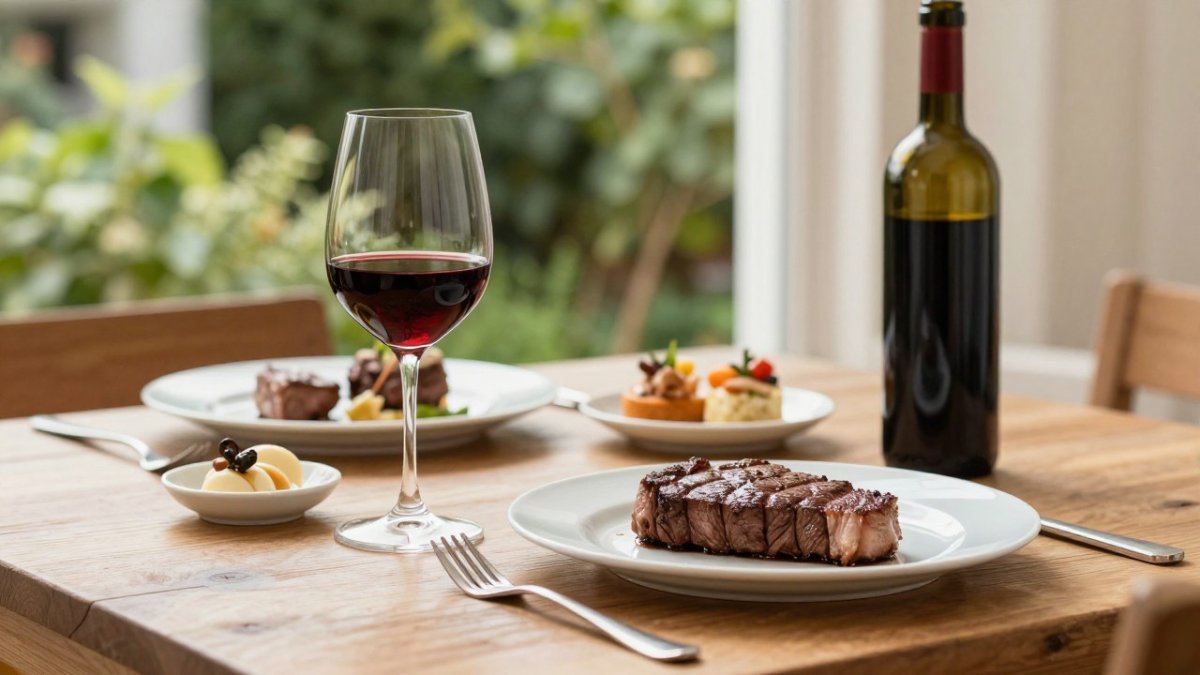
Good matches for rich food:
- Steak and grilled red meat: Cabernet Sauvignon, Syrah, or a Malbec.
- Braised meat and stews: a full-bodied red with soft tannins, like a Merlot blend.
- Creamy or buttery sauces: an oaked Chardonnay or a white with good body.
- Tomato-based sauces: a medium red like Sangiovese, which has the acidity to match the tomato.
The sauce often decides more than the meat. A steak with a peppercorn cream sauce and a steak with chimichurri are two different pairings. Taste the sauce in your head before you pick.
Before you lock in a red for the meal, it helps to check the tapas and dinner offerings so the wine and the plate actually line up.
How to Choose a Red Wine for Your Menu
How to choose a red wine comes down to matching its weight and tannin to the dish. Tannin is the drying, grippy feeling in reds, and it loves fat and protein. Light reds suit lighter food. Big reds suit big food. That is the short version. The useful version is a decision path you can run in a shop aisle or in front of a wine list.
A simple path:
- Light dishes (chicken, mushrooms, charcuterie): Pinot Noir or a light Beaujolais.
- Medium dishes (pasta, pizza, roasted vegetables): Sangiovese, Grenache, or a medium Merlot.
- Heavy dishes (steak, lamb, burgers): Cabernet Sauvignon, Syrah, or Malbec.
Tannin is a tool, not a rule. A high-tannin red with a fatty dish feels smooth because the fat and protein bind the tannin and soften the grip. The same wine with a plain salad tastes bitter, because there is nothing on the plate to absorb it. Match the tannin to the fat on the plate and you are set.
Read the dish in three passes before you pick:
- Main ingredient: beef, lamb, pork, chicken, or vegetables. This sets the weight floor.
- Preparation: grilled, roasted, braised, or raw. Grilling and roasting add char and concentrate flavor, which pushes you toward a fuller red; braising adds richness and softens tannin, which lets you go bigger.
- Sauce: cream, tomato, pepper, or herb. A cream sauce wants a red with soft tannin and good body; a tomato sauce wants acidity, which is why Sangiovese works; a peppercorn sauce wants structure to cut the fat.
A steak with a peppercorn cream sauce and a steak with chimichurri are two different pairings. Taste the sauce in your head before you pick.
At a wine shop, use the label and the shelf talker. Alcohol by volume is printed on most US labels: under about 13% tends to mean a lighter, fresher red; 14% and up tends to mean a riper, fuller red. That is a rough guide, not a guarantee, but it is a fast filter. Ask the person at the counter what the wine was built for, a good wine shop will point you to a bottle that fits your dinner, and a good restaurant will do the same.
On a restaurant list, the same logic applies. Tell the server the main dish and the sauce, and ask for a red at the body level you want. You do not need to name a grape; describing the food is enough for a good list to steer you.
Before you lock in a red for the meal, it helps to check the tapas and dinner offerings so the wine and the plate actually line up.
How to Choose a White Wine or Rosé
White wine and rosé are the flexible choice for dinner. They cover lighter dishes, seafood, chicken, and spicy food, and they are easier to match when the table orders different things. The key is to pick by freshness and body, not by brand.
Here is how the main whites stack up:
- Sauvignon Blanc: light, crisp, citrusy. Great with salads, seafood, and goat cheese.
- Pinot Grigio: light and clean. Works with light appetizers and simple fish.
- Chardonnay: fuller, especially oaked. Pairs with chicken, creamy pasta, and buttery sauces.
- Chenin Blanc: medium body with good acidity. A versatile pick for mixed menus.
- Dry rosé: light and fresh, with a bit of red-fruit flavor. Handles tapas, salads, and grilled food well.
- Sparkling wine: high acidity and bubbles. One of the most food-friendly options there is.
A dry rosé or a sparkling wine is the safest bottle when your guests order all over the menu. Both have the freshness to handle light dishes and enough character to stand up to richer ones.
Best Wine for a Dinner Party: Bottle Count and Guest Preferences
The best wine for a dinner party is one that fits the food and gives guests a choice. Plan for variety over perfection. A mixed table is easier to please with two or three styles than one “perfect” bottle. It helps to work through the arithmetic: how many glasses a bottle pours, what that means for your guest count, and how to handle guests who do not drink or eat the main dish.
Start with the pour math. A standard 750 ml bottle holds about five 5-ounce glasses, the standard restaurant pour in the United States. A 1.5 L magnum holds about ten. Sparkling pours smaller, closer to four glasses per bottle, because flutes and coupes take less. That math drives everything else.
A working rule for a seated dinner: plan one bottle for every two to three guests, then add one spare bottle per style. For a four-guest dinner, that is two bottles in service plus a spare. For eight guests, three to four bottles plus a spare. If wine is the focus of the night, move toward the higher end; if cocktails or beer are also flowing, the lower end is fine.
Watch out: running out mid-main is worse than having a bottle left over, and a spare bottle that stays sealed keeps for another dinner.
Set a per-bottle ceiling before you shop and hold to it, because the food is usually the larger line item. A common pattern is to spend more on the bottle that carries the main course and less on the aperitif and the backup. Two mid-priced bottles that fit the food beat one expensive bottle that fights it. If you are ordering from a restaurant list instead of a shop, ask the server which bottles give the best value for your menu.
A simple party plan:
- One crisp white (Sauvignon Blanc or Pinot Grigio) for lighter dishes and guests who prefer white.
- One medium red (Pinot Noir or a Merlot) that works with most mains.
- One crowd-pleaser (dry rosé or sparkling) for flexibility and toasts.
- One spare of whichever style your group drinks fastest.
Dietary needs and mixed menus matter when planning a table. If a guest avoids alcohol, have a non-alcoholic option ready, such as sparkling water with citrus, and pour it in a wine glass so the guest is not the only one without a stem. If someone eats plant-based, lean on lighter reds and crisp whites that suit vegetables and grains; a high-acid white like Sauvignon Blanc handles roasted vegetables and grains better than a tannic red. If the menu is spicy, keep a slightly off-dry white or a sparkling wine on hand, because sweetness and bubbles tame heat. Ask about preferences when you send the invite and the planning gets easy.
Finally, plan the serving order. Open the crisp white first, move to the red with the main, and save the sparkling for a toast or the end. Chill whites and sparkling ahead of time, and keep reds in a cool spot rather than next to the oven. If you would rather not run the math yourself, contact Vino Locale with your guest count and menu.
Wine Serving Temperature, Glassware, and Opening the Bottle
Wine serving temperature changes how a wine tastes, and most people serve reds too warm and whites too cold. Get the temperature right and even a simple bottle tastes better.
Rough targets:
- Sparkling: well chilled.
- Crisp whites and rosé: chilled.
- Fuller whites: lightly chilled, not ice cold.
- Light reds: slightly cool.
- Full reds: cool room temperature, not warm.
A red served too warm tastes flabby and alcoholic. A white served too cold hides its flavor. Take a red out of a hot kitchen and give it a few minutes to settle before pouring.
On glassware, a wider bowl helps reds breathe and a narrower glass keeps whites crisp. You do not need a cabinet full of shapes. One all-purpose wine glass handles most dinners well.
Opening the bottle: cut the foil clean, wipe the neck, and ease the cork out slowly. For sparkling, hold the cork and twist the bottle, not the other way around. Let a young red breathe for a few minutes before pouring.
If you want to put all this serving advice into practice, our guide on how to find good wine bars shows what a well-run wine program looks like in person.
A Step-by-Step Decision Process for One Dinner
Here is the whole process in one place, using a real example: a dinner of grilled steak with a peppercorn sauce, a green salad to start, and roasted chicken for one guest who does not eat red meat.
- Read the menu. Note the heaviest dish and the lightest dish. Here, that is steak and salad.
- Match intensity. The steak is heavy, so you need at least one full-bodied red.
- Match acidity and body. The peppercorn cream sauce is rich, so a red with good structure works. The salad wants something crisp.
- Cover the outliers. The chicken guest needs a white or light red, so add a Chardonnay or Pinot Noir.
- Pick the bottles. A Cabernet for the steak, a Sauvignon Blanc for the salad, and a Chardonnay for the chicken.
- Plan quantity. For four guests, three bottles gives everyone a choice with a little buffer.
- Serve at the right temperature. Chill the whites, keep the red cool, and open the red a few minutes early.
That is the whole method. Food first, then intensity, then acidity and body, then a bottle for each kind of dish. Run it once and it becomes second nature.
Let Vino Locale Handle the Pairing for You
The easiest way to choose a wine for dinner is to let someone who does it every night help you. That is what we do at Vino Locale. Our European-style wine garden and kitchen is located in downtown Palo Alto, and we have been serving guests since 2005.
If you are planning a dinner out, come sit in the garden or the dining room and let us match the wine to your meal. We offer an extensive wine selection, beer flights, and tapas, in a relaxed setting for casual lunch, happy hour, and dinner. Planning something bigger? We host private events for up to 100 guests.
To see what is on the menu before you visit, check our private events page and get in touch. Tell us the dish and the occasion, and we will point you to the right bottle.
Choosing wine for dinner does not have to be intimidating. Start with the food, match the intensity, and give your guests a choice. If you would rather leave the pairing to us, Vino Locale is here in downtown Palo Alto with a wine list, tapas, and a garden built for good meals and friendly gatherings. Get started with Vino Locale and enjoy a dinner where the wine and the food finally agree.
Frequently Asked Questions
What is the 20/20/20 rule for wine?
The 20/20/20 rule is a simple serving guideline: open the bottle about 20 minutes before pouring, serve it around 20 degrees Celsius for reds (cooler for whites), and pour roughly 20 milliliters per taste. Treat it as a starting point rather than a strict law. For dinner, the more useful version is to open reds 20 minutes ahead so they breathe, chill whites in the fridge, and pour modest tastes so guests can decide before you fill glasses.
Should I choose the wine before or after planning the menu?
Plan the menu first, then pick the wine. The food sets the intensity, acidity, and sweetness you need to match, so choosing wine first often leads to clashes. Once you know whether the main dish is light and fresh or rich and deep, you can select a bottle that complements it.
How much wine should I plan for a dinner party?
A common rule of thumb is half a bottle per guest for a dinner where wine is served throughout the meal, plus a little extra. For a mixed group, plan one red and one white or rosé so guests can choose. If you are ordering from a wine list or hosting at a restaurant, confirm the count with staff ahead of time. Vino Locale hosts private events for up to 100 guests.
What wine should I serve when guests have different preferences?
Offer two or three options rather than one bottle. A crisp white such as Sauvignon Blanc or Pinot Grigio, a medium red such as Pinot Noir, and a dry rosé cover most preferences and pair with a wide range of dishes. Keep serving temperatures in mind: chill whites and rosé, and serve reds slightly below room temperature.
