
Table of Contents
- Downtown Palo Alto Restaurants with Outdoor Seating
- Wine Garden Dining: A Different Kind of Outdoor Meal
- Private Event Venues with Outdoor Space for Groups
- Weather-Proof Patios: Heated and Covered Outdoor Seating
- Accessibility and Parking for Outdoor Dining
- Pet-Friendly Patios and Quiet Corners for Meetings
- Conclusion
- Frequently Asked Questions
Last Updated: September 25, 2026
Downtown Palo Alto Restaurants with Outdoor Seating
Finding outdoor seating Palo Alto restaurants starts with knowing what kind of afternoon you want. A quick lunch between meetings calls for different patio seating than a lingering dinner, and downtown’s compact blocks pack several distinct outdoor setups into a few walkable streets.
Al fresco dining here splits into three rough categories: sidewalk cafe tables for people-watching, garden terraces set back from traffic, and covered patios that work year-round. Each has trade-offs. Street-side tables put you close to the action but also close to the noise. Garden seating trades visibility for calm. Covered and heated patios cost a little more per head but rarely get rained out.
Vino Locale has operated a European-style wine garden and kitchen downtown since 2005, which means we’ve watched this dining scene shift through many seasons. What follows is a practical breakdown of how to choose among downtown Palo Alto restaurants with outdoor seating, organized by the occasion rather than by hype.
Match the patio to the purpose. Sidewalk tables suit quick, social meals. Garden terraces suit conversation. Covered patios suit anything you can’t reschedule.
Wine Garden Dining: A Different Kind of Outdoor Meal
Wine garden dining is outdoor seating Palo Alto diners seek for a slower pace: shared small plates, a curated wine list, and a setting designed for conversation rather than turnover. It sits between a casual eatery and fine dining, with the relaxed dress code of the former and the attention to detail of the latter.
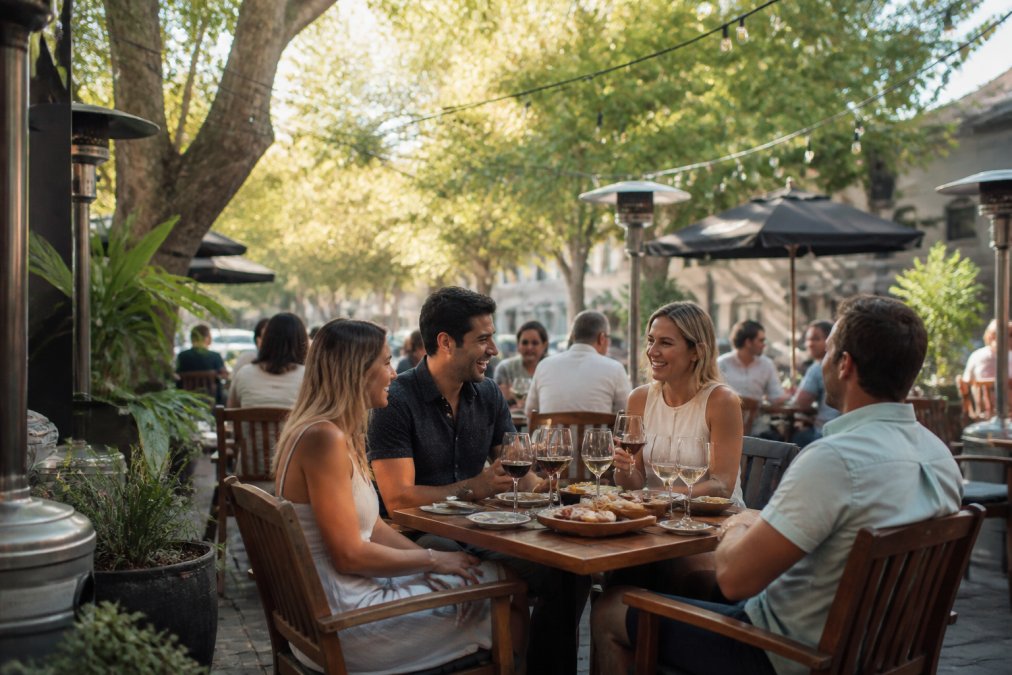
The format changes how you order. Instead of entrées arriving at once, tapas and wine flights come in waves, which suits groups that want to graze and talk. A common mistake is treating a wine garden like a standard dinner reservation and booking a tight window. Give it two hours, minimum.
Locally sourced ingredients and seasonal menus are standard at the better wine gardens, so the list shifts through the year. Ask what’s pouring before you commit to a bottle.
Private Event Venues with Outdoor Space for Groups
Private event venues with outdoor space solve a problem that indoor rooms can’t: capacity plus fresh air. For corporate groups, the practical questions are headcount, weather backup, and whether the space can be reserved exclusively.
For groups over 30, ask about a dedicated host and a preset flight selection. It cuts the ordering bottleneck at the start of the event, when everyone arrives at once.
| Group Size | Best Setup | Typical Use |
|---|---|---|
| 2-6 | Garden table, seated | Dates, small meetings |
| 7-15 | Patio section, mixed seating | Team lunches, birthdays |
| 16-40 | Reserved patio, standing tables | Offsites, happy hours |
| 40-100 | Full garden buyout | Corporate events, receptions |
Weather-Proof Patios: Heated and Covered Outdoor Seating
Heated and covered patios extend outdoor dining into every season, and they’re the single most useful feature to check before booking. A heated patio with overhead cover handles a cool evening or a light drizzle without moving the party inside. Most guides list patios without saying whether they can actually be used in January, this section is built to fix that gap.
- Patio heaters. Radiant or mushroom-style units warm the air around a table, not the whole patio. They matter most for evening dinner service, when temperatures drop fast after sunset. Ask whether heaters are permanent or rolled out only on request, a patio that stores its heaters often won’t set them up for a two-top.
- Overhead coverings. Retractable awnings, umbrellas, and permanent roofs behave differently. A retractable awning can be pulled back on a warm day and extended in a drizzle; a fixed roof blocks sun year-round but may not stop wind-driven rain. Umbrellas are the weakest option, they fail in any real weather.
- Windbreaks. Glass panels, planters, and fabric screens block the gusts that street-side tables catch from passing traffic. A garden terrace set back from the sidewalk rarely needs them; a sidewalk table almost always does.
- Fire pits and outdoor fireplaces. These add warmth and atmosphere for evening groups, but they’re usually limited to a few seats and often require a minimum spend or a reservation for the surrounding table.
When you book, ask specifically whether the heater will be on at your reservation time and whether the cover is retractable. “Heated patio” in a listing can mean anything from permanent infrared units to a single portable heater shared across the space.
A practical way to sort patios by season:
| Season | What to prioritize | What to avoid |
|---|---|---|
| Late spring / summer | Shade, umbrellas, garden tables | Uncovered west-facing tables at midday |
| Early fall | Retractable cover, light layers | Patios with no overhead option |
| Winter | Permanent cover plus permanent heaters | Umbrella-only patios, sidewalk tables |
| Rainy stretches | Fixed roof, indoor backup reserved | Any patio without a written rain plan |
Accessibility and Parking for Outdoor Dining
Accessibility and parking decide whether a patio is actually usable, and both get overlooked in most guides. Under the ADA, places of public accommodation must provide accessible routes and seating, and outdoor dining areas fall under those requirements.
ADA requirements for places of public accommodation
Don’t assume a patio is accessible because the restaurant is. Outdoor seating is sometimes added after the fact, and older setups may lack a step-free route. Confirm by phone before promising a table to a guest with mobility needs.
Pet-Friendly Patios and Quiet Corners for Meetings
- Call ahead about dogs, since policy can change by season and by whether the patio is technically part of the food service area.
- Ask whether water bowls and shade are provided, or whether you should bring your own.
- Choose a garden or side-street table over a sidewalk table, less foot traffic means fewer startled dogs and fewer tripping hazards for servers.
- Avoid peak lunch and dinner hours, when tight table spacing makes a leashed dog a logistical problem for everyone.
| Patio type | Typical noise level | Best for | Worst for |
|---|---|---|---|
| Sidewalk, main street | Loud at commute and lunch hours | People-watching, casual social meals | Calls, quiet conversation |
| Sidewalk, side street | Moderate | Small groups, casual meetings | Focused work |
| Garden terrace, set back | Quiet almost always | Meetings, dates, conversation | Groups that want energy |
| Covered patio with music | Moderate to loud | Evening groups, happy hours | Anything requiring focus |
A few more rules that hold across both cases:
- Request a corner or garden table when you book, not on arrival, the good quiet tables go first.
- Avoid peak lunch hours if you need to hear a call clearly.
- Bring a hotspot as backup for critical meetings, since patio wifi is often an afterthought.
- Check that the table has shade for midday outdoor dining; glare on a laptop screen is its own kind of noise.
- Ask whether the patio has background music, and at what volume, this is the single biggest swing factor between a usable and unusable work table.
Don’t assume a patio is quiet because it’s outdoors. Street-side tables run loud at commute hours, and a covered patio with speakers can be louder than an indoor dining room. If the meeting matters, choose the garden, and confirm the music policy when you book.
If you’re planning around a dog and a meeting at the same time, the garden section is the only setup that reliably serves both: enough space for a leashed dog, enough distance from traffic to hear a call, and shade for a midday table.
Conclusion
Choosing among restaurants with outdoor seating in Palo Alto comes down to matching the patio to the plan: weather cover for anything you can’t reschedule, a garden table for conversation, and a confirmed accessible route for every guest. Get those three right and the rest follows.
Frequently Asked Questions
What is outside seating at a restaurant called?
Outdoor seating goes by several names: patio seating, sidewalk cafe, garden terrace, or al fresco dining. Each describes a slightly different setup. A sidewalk cafe sits along the street, a patio is usually attached to the building, and a garden terrace is set back with plants and landscaping. When searching for restaurants with outdoor seating in Palo Alto, you will see all these terms. The right choice depends on whether you want people-watching, quiet, or shade.
Which restaurants offer heated outdoor patios for cooler evenings?
Many downtown Palo Alto restaurants with outdoor seating add heaters, fire pits, or overhead covers for cooler months. Heated patios let you eat outside comfortably from fall through spring. When you call to reserve, ask specifically whether the heat lamps are on and whether the patio is covered if rain is forecast. Some spots only run heaters during dinner service, so a lunch visit may feel different. Always confirm before you go.
Are there dog-friendly restaurants with outdoor seating?
Yes, several restaurants with outdoor seating in Palo Alto welcome leashed dogs on their patios. Pet-friendly policies vary by venue and sometimes by local health rules. Call ahead to confirm. Even at dog-friendly spots, keep your pet on a short leash and away from walkways. Water bowls are often available on request. If you plan to bring a dog to a wine garden or group dinner, mention it when you book so staff can seat you appropriately.
Do I need a reservation for outdoor dining at popular spots?
For weekend dinners and large groups, reservations are strongly recommended at restaurants with outdoor seating in Palo Alto. Patio tables are limited, and walk-ins may wait 30 minutes or more on busy nights. Weekday lunches are usually easier to get without a booking. If you want a specific table, such as a quiet corner or a shaded spot, note that in your reservation. For private event venues with outdoor space, book weeks in advance.
Planning a lunch, a happy hour, or a 40-person offsite takes more than a map search. Vino Locale offers a garden and patio setting downtown, customizable wine flights, tapas, and private event space for up to 100 guests, all in a relaxed atmosphere that works for dates, meetings, and team gatherings alike. Get started with Vino Locale and book the outdoor table that fits your occasion.