
Last Updated: November 10, 2026
Quick Summary
Non-alcoholic wine tasting works best when you slow down, use a wide-bowled glass, and follow three steps: look, smell, and sip. Without alcohol, the wine’s acidity and fruit show more clearly, so give each glass about ten minutes before you judge it.
- Give each glass about ten minutes before judging it.
- Use a wide-bowled glass filled about one-third full so you can swirl.
- Follow three steps in order: look, smell, then sip.
- Serve sparkling and crisp whites at 40-45°F, chilled in an ice bath for 20-30 minutes.
- Pair dry, high-acid NA whites with oysters, olives, and salty cheeses.
Table of Contents
- Why Non-Alcoholic Wine Tastes Different and How to Start
- Set Up the Right Environment and Glassware
- How to Taste Wine for Beginners: Look, Smell, Sip
- Serving Temperature and Palate Cleansing
- How to Make Non-Alcoholic Wine Taste Better
- Non-Alcoholic Wine Food Pairings That Work
- Build a Wine Tasting Guide Sheet and Host Your Own Tasting
- Frequently Asked Questions
Why Non-Alcoholic Wine Tastes Different and How to Start
Non-alcoholic wine tasting tips for beginners are easier to follow once you know one thing: without alcohol, the wine’s structure feels different on the palate, which is the first thing to understand in any non-alcoholic wine tasting. That is why a glass that tastes “thin” to you may simply be showing you its true balance.
The most common first step is slowing down. Give yourself ten minutes with one glass before you judge it.
- Expect less warmth and weight than a standard wine
- Pay closer attention to acidity and fruit
- Compare two or three options side by side, not one alone
Set Up the Right Environment and Glassware
Lighting and glassware matter more than most beginners expect. Look at the wine against a plain white background, such as a napkin or tablecloth, so you can judge its color. Natural light from a window works well. Avoid strongly scented candles or perfume nearby, because they can mask delicate aromas.
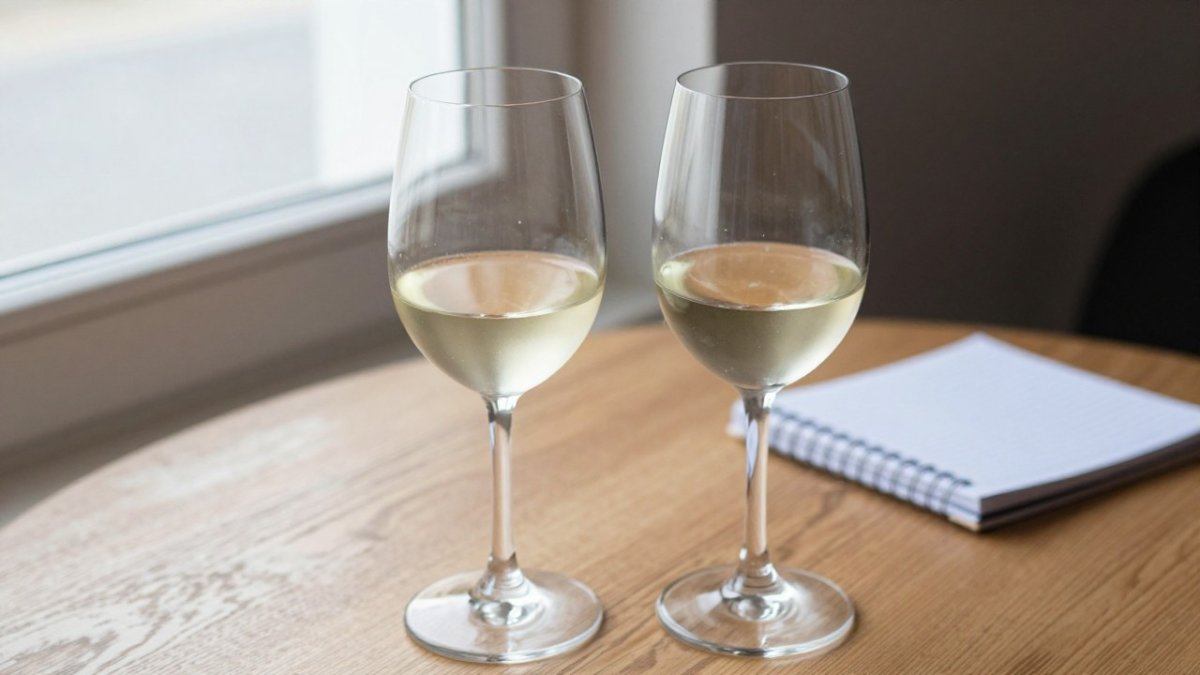
Glassware is the other half of the setup. Choose a glass with a wide bowl and a narrow rim. The bowl gives the wine room to open up, and the narrow rim concentrates the aromas toward your nose. Non-alcoholic wines often carry lighter aromas, so this detail helps more than it does with heavy reds.
If you are tasting at home, try these basics:
- Use a clean, dry glass with no soap residue
- Fill it about one-third full so you can swirl
- Keep a glass of plain water nearby for resetting your palate
- Taste in a quiet spot with few distractions
For a guided setup rather than doing it yourself, you can book a wine tasting session and let the staff walk you through it.
How to Taste Wine for Beginners: Look, Smell, Sip
Tasting wine follows three steps: look, smell, and sip. Each step gives you information before you ever swallow. Work through them in order, and write down what you notice. Your notes will help you spot patterns across different bottles.
If you want to practice these steps with several wines at once, you can order a flight of different wines and compare color, aroma, and taste side by side.
Judging Visual Clarity and Color
Start by tilting the glass against a white background. Note the color, from pale straw to deep gold or ruby. Then look at clarity. A clear wine with a bright color usually signals freshness. Cloudiness can mean the wine is young or unfiltered, which is not always a problem but is worth noting.
Color also gives hints about flavor. Lighter wines often taste crisper, while deeper colors can point to riper fruit or more oak influence.
Identifying Aromas Step by Step
Next, bring the glass to your nose. Swirl gently first, then take a short sniff, then a longer one. Do not stick your whole face in the glass. Try to name what you smell: green apple, citrus peel, berries, or something floral.
If nothing comes to mind, that is normal. Most beginners need practice. A simple trick is to smell a fresh fruit, such as a lemon or a strawberry, and then smell the wine. The match often becomes clear.
Serving Temperature and Palate Cleansing
Use these starting points, then adjust to your own taste:
- Sparkling and crisp whites: 40-45°F. Chill in an ice bath for 20-30 minutes rather than the refrigerator, which is often too warm for sparkling.
- Aromatic whites and rosé: 45-50°F. Pull them from the refrigerator about 10 minutes before pouring so the fruit opens up.
- Light reds and chillable reds: 55-60°F. Fifteen minutes in the refrigerator is usually enough; most NA reds are more enjoyable slightly cool because the lack of alcohol makes warm serving temperatures amplify sweetness.
- Full-bodied reds: 60-65°F. If a red tastes syrupy or jammy, it is almost certainly too warm.
For a guided setup rather than doing it yourself, you can book a wine tasting session and let the staff walk you through temperature and palate resets.
Recommended serving temperatures by wine style
How to Make Non-Alcoholic Wine Taste Better
Many beginners find the first sip disappointing, but small adjustments help. Try serving the wine in a proper glass at the right temperature, and pair it with food. Salt, fat, and acid often bring out the fruit and balance any sweetness.
Some people also use a small amount of citrus or a few drops of bitters in a spritzer-style drink to add complexity. Vinegar can sharpen flavors too, though it works best in small amounts and mainly in cooking rather than in the glass itself.
- Chill the wine properly before serving
- Add a squeeze of lemon or lime for brightness
- Pair with salty or fatty foods
- Let the bottle breathe for a few minutes after opening
Non-Alcoholic Wine Food Pairings That Work
Food pairing is where non-alcoholic wine often shines, but the rules differ from standard wine pairing in one important way: without alcohol’s heat and body, the wine’s sugar and acid do most of the work against the food. That changes which dishes flatter which bottles.
The core principle is balance. Match the wine’s sweetness to the dish’s sweetness or heat, and match its acidity to the dish’s fat or salt. A dry, high-acid NA white cuts through fried food and salty cheese the way a crisp alcoholic white would. A fruit-forward NA red with noticeable residual sugar handles barbecue sauce, glazed carrots, and spicy dishes better than a dry red, because the sugar cools the heat and the fruit meets the sauce.
Concrete pairings that work well:
- Crisp, dry NA sparkling or white: oysters, olives, salty cheeses like feta or manchego, fried calamari, and light seafood. The acidity and bubbles reset the palate between bites.
- Aromatic NA white (think Riesling-style): spicy Thai or Indian dishes, pork with fruit sauce, and blue cheese. A touch of sweetness tames capsaicin.
- Rosé-style NA wine: grilled vegetables, charcuterie, and tomato-based dishes. It sits between white and red in both acidity and fruit weight.
- Light NA red: roasted chicken, mushroom dishes, and mild cheeses. Keep the dish simple so the wine’s fruit is not buried.
- Fuller NA red: burgers, barbecue, and braised meats. The lack of alcohol means the wine will not overwhelm the food, so you can pair it with dishes that would overpower a delicate red.
At Vino Locale, you can check the wines and beverages we offer and plan your pairings before you arrive.
Build a Wine Tasting Guide Sheet and Host Your Own Tasting
A simple guide sheet keeps your tasting focused. Create one column for each wine and rows for color, aroma, taste, finish, and your overall rating. Use the same words each time so you can compare results later. This is also a useful wine tasting guide sheet for group events.
To host your own tasting, invite three to six people, serve four wines, and give everyone the same sheet. Keep the pours small and provide water and plain crackers between glasses. Discuss one wine at a time before moving on.
If you would rather taste in a bar setting, you can find practical advice on picking a good wine bar before you go. For a group tasting, review our group booking rules before you plan the date.
Whether you taste at home or out with friends, the best way to learn is to keep trying new bottles and writing down what you notice. We hope this guide helps you find flavors you enjoy, and we would love to see you at Vino Locale.
Frequently Asked Questions
How do you make non-alcoholic wine taste better?
Use a larger glass so the wine can open up, and give it a gentle swirl before smelling. Pair it with salty or fatty foods such as cheese, olives or tapas, which balance the sweetness and make the fruit notes more noticeable.
How is non-alcoholic wine different from regular wine when tasting?
Without alcohol, non-alcoholic wine often feels lighter and less warm on the palate, and its aromas can seem more muted. Look for mouthfeel, the texture of the wine on your tongue, and notice the finish, or how long the flavor lingers. Judging it on its own terms, rather than as a substitute for a specific wine, makes the tasting more useful.
What should beginners look for when tasting non-alcoholic wine?
Start with visual clarity and color, then smell the wine for fruit, floral or herbal notes. Take a small sip and let it coat your tongue to assess sweetness, acidity and body. Note whether the flavors stay consistent through the finish. Writing a few words for each step, such as bright, dry or jammy, helps you compare bottles over time.
How do you host a non-alcoholic wine tasting at home?
Choose three to five bottles with different styles, such as a sparkling white, a rosé and a red. Set out a simple tasting sheet and taste from lightest to fullest. Keep the room well lit and free of strong scents so guests can focus on aroma and flavor.
