
Last Updated: November 17, 2026
Quick Summary
Low sugar wine is not guaranteed by removing alcohol, so check the nutrition panel rather than the front label. Compare grams of sugar per 5-ounce serving, since a 750-milliliter bottle holds about five servings. Look for added sugar listed separately and confirm the numbers before you buy.
- Removing alcohol can leave sugar behind, so zero alcohol does not mean low sugar.
- Compare sugar per 5-ounce serving, since a 750-milliliter bottle holds about five servings.
- Check the added sugar line, the number to watch if you want a dry pour.
- Treat “low sugar” front-label claims as marketing until the nutrition panel backs them up.
- Taste a small glass of dry red before buying a case, since some taste thin once sweetness is removed.
Table of Contents
- Why Alcohol-Free Does Not Mean Low Sugar
- How to Read Sugar and Calorie Labels on Non-Alcoholic Wine
- Best Non Alcoholic Wine No Sugar Options to Compare
- Low Sugar Non Alcoholic Red Wine Choices and Tasting Trade-Offs
- Low Sugar Wines for Diabetics: What to Check First
- Finding Non Alcoholic Wine Near Me in Palo Alto
- Booking Your Next Wine Night at Vino Locale
- Frequently Asked Questions
Why Alcohol-Free Does Not Mean Low Sugar
People who want to skip the alcohol without skipping the taste often look for low sugar wine. Many of them assume that a bottle with no alcohol must also be light on sugar. That assumption does not hold up well. Research published in OENO One found that sugar is a key factor in fully dealcoholized Chardonnay, and that some alcohol-free white wines resemble juice and soda in this respect (OENO One study on sugar in dealcoholized Chardonnay).
Removing alcohol can leave sugar behind. A 2023 discussion of non-alcoholic wine production reports a perceptible tradeoff between alcohol and sugar in these products (Beverages (MDPI) discussion of alcohol and sugar tradeoffs). In practice, that means “zero alcohol” tells you nothing about sweetness. Since alcohol content alone cannot predict sweetness, the same distinction between what is removed and what remains matters when comparing non-alcoholic whiskey alternatives.
How to Read Sugar and Calorie Labels on Non-Alcoholic Wine
Start with the nutrition panel, not the front of the bottle. Look for grams of sugar per serving, the serving size, and the calories per serving. Compare these numbers across bottles only when the serving sizes match.
The panel reports total sugar, which includes both naturally occurring sugar from the grapes and any sugar added during production. Added sugar appears as its own line under total sugar when a producer uses it, and it is the number to watch if you are trying to keep a drink dry. Residual sugar is a winemaking term for the sugar left after fermentation; it usually does not appear on the label by name, but it is part of the total sugar figure. Carbohydrates include sugar plus any sugar alcohols or other carbohydrate compounds, so a bottle can show low sugar and still carry a meaningful carbohydrate count.
Serving size is where most comparisons go wrong. A wine-style bottle is 750 milliliters, which is roughly five 5-ounce servings. A label that reports 2 grams of sugar per serving is reporting about 10 grams per bottle. Multiply before you judge, and convert every bottle you compare to the same 5-ounce basis.
Calorie claims help, but they do not settle the question. A brand can advertise a low calorie count and still carry a fair amount of sugar, because alcohol removal changes both numbers independently. Check the sugar line directly rather than trusting a front-label calorie badge.
To verify a claim, cross-check three sources: the nutrition panel on the bottle, the product page on the producer’s website, and the retailer’s listing. If the three disagree, treat the highest figure as the working number and ask the retailer for the current label. Producers reformulate, and a review from two years ago may describe a different liquid than the one on the shelf today.
Watch out: “Low sugar” is not a defined legal term for wine-style beverages the way it is for some packaged foods, so a front-label claim is marketing language until the nutrition panel backs it up with a number and a serving size.
Watch out: Serving sizes on wine-style bottles vary. A “per glass” figure can look small while the bottle holds several glasses, so multiply before you judge.
Use this quick reference to compare the label details the article highlights.
| Label item | What to check | Why it matters |
|---|---|---|
| Total sugar | Grams per serving | Includes naturally occurring and added sugar |
| Added sugar | Separate line under total sugar | The number to watch if you want a dry pour |
| Serving size | Compare bottles on the same basis | Per-glass figures can look small |
| Bottle volume | 750 milliliters, about five 5-ounce servings | Multiply per-serving sugar to get bottle total |
| Carbohydrates | Total carbs on the panel | Can be meaningful even when sugar is low |
| Front-label claims | Confirm against the nutrition panel | “Low sugar” is marketing until a number backs it |
Best Non Alcoholic Wine No Sugar Options to Compare
Retailers now sell low-sugar non-alcoholic wine as its own category. One online shop lists 31 products under its “No/Low Sugar” filter (The Zero Proof low and no sugar selection). A long list is not the same as a low-sugar product, though, so compare each label before you buy.
Our approach is to pick bottles by style first, then check the sugar. Start with the taste you want, then confirm the numbers. Below are the styles worth comparing, what each typically delivers in the glass, and the label details that separate a genuinely dry pour from a sweet one dressed up as dry.
Dry Red, White, and Sparkling Picks
Look for bottles labeled “brut” or “extra brut” rather than “doux” or “demi-sec,” and check that the nutrition panel reports grams of sugar per 5-ounce serving, not per 750-milliliter bottle.
Dry whites vary more. A dealcoholized Chardonnay can carry noticeable sweetness, and the label is the place to check how dry a given bottle is.
Dry reds can be harder to get right, because tannin and body come partly from the alcohol. Taste a small glass before you buy a case.
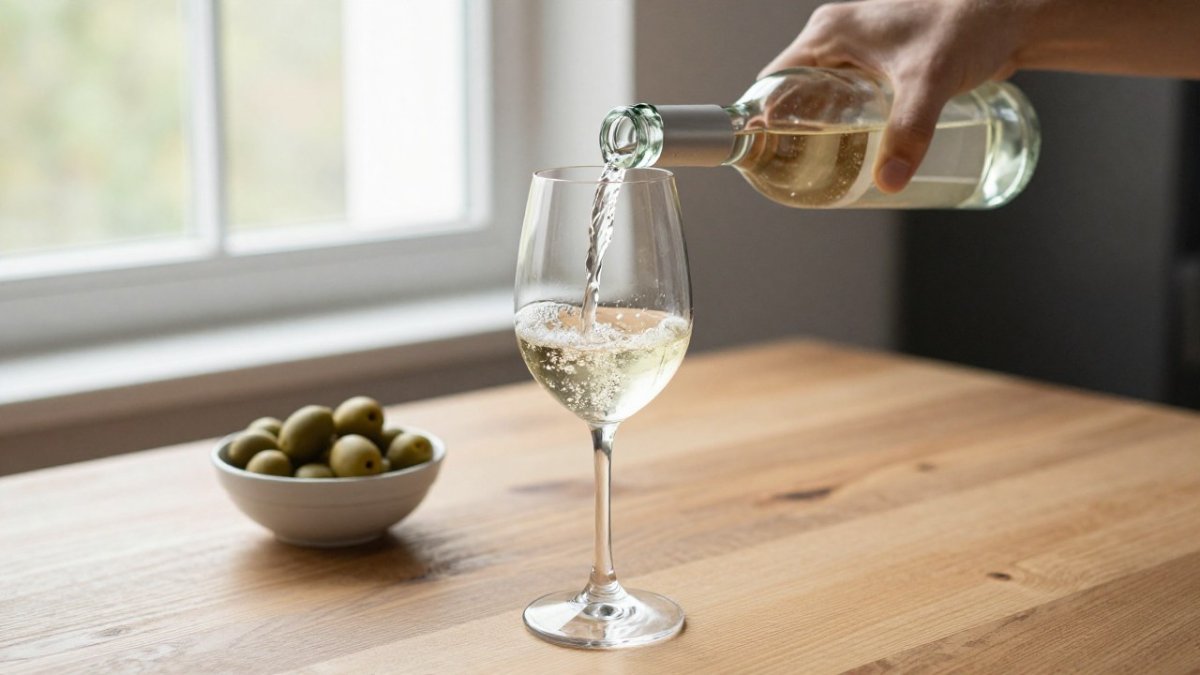
A practical comparison method: line up one sparkling, one crisp white, and one structured red, pour each into a stemmed glass, and note sweetness, acidity, tannin, body, and finish.
Watch out: A bottle labeled “0g sugar” may still contain sugar alcohols or added sweeteners that the nutrition panel reports under carbohydrates rather than sugar, so read the full panel and the ingredient list together.
!Hands pouring a pale sparkling non-alcoholic wine into a stemmed glass at a wooden table
Low Sugar Non Alcoholic Red Wine Choices and Tasting Trade-Offs
Red styles often bring a firmer structure, which can make a lower-sugar bottle feel more satisfying. The trade-off is that some dry reds can taste thin or sharp when the sweetness is removed. Taste a small glass before you buy a case.
Our advice is simple: if you want a dry red that tastes full, expect to pay attention to the label rather than the marketing copy.
Low Sugar Wines for Diabetics: What to Check First
If you manage blood sugar, start with the grams of sugar per serving and the serving size on the label. Then confirm the carbohydrate count, since sugar is only one part of the picture. Talk with your doctor or a registered dietitian about how any drink fits your plan, because individual needs differ.
Finding Non Alcoholic Wine Near Me in Palo Alto
Shoppers searching for non-alcoholic wine near me in Palo Alto can check local stores before ordering online. Call ahead to confirm stock, since shelves change quickly. You can also read the best wine bars in Palo Alto for 2026 to plan an outing.
Booking Your Next Wine Night at Vino Locale
Vino Locale is a European-style wine garden and kitchen in downtown Palo Alto, serving casual lunch, happy hour, and dinner. Before you plan a group visit, review our reservation group policies so you know what to expect. For a lighter evening, browse the happy hour options, and see what is on the menu with our tapas and dinner selections. If you want to try a range of styles, our wine tasting experience is a good way to compare bottles side by side.
Frequently Asked Questions
What non-alcoholic wine has the least sugar?
Dry styles generally carry the least sugar, but no alcohol-free wine is guaranteed low in sugar. Research published in OENO One found sugar is a key factor in fully dealcoholized Chardonnay, and some alcohol-free whites resemble juice and soda in that respect. Check the nutrition panel for grams of sugar per serving, and compare the serving size on each label before deciding which bottle is actually lowest in sugar.
Is there a non-alcoholic wine with no sugar?
Some products list zero grams of sugar per serving, but the label is the only reliable check. Retailers increasingly list alcohol-free wines with low or no sugar options, which shows the category exists. Look at the sugar line on the nutrition facts, not marketing language like low-carb, and remember that a serving may be smaller than the glass you pour.
Are non-alcoholic wine alternatives suitable for people with diabetes?
They can be a reasonable choice for some people, but they are not automatically suitable. Alcohol-free wines still contain residual sugar and carbohydrates, and blood sugar response varies by person. Check the grams of sugar and carbohydrates per serving, keep portions measured, and ask your doctor or diabetes care team whether a specific product fits your meal plan.
Is there any non-alcoholic wine that actually tastes like wine?
Many dealcoholized wines taste closer to grape juice than to a dry table wine, which is one of the main trade-offs. Dry, well-structured styles and sparkling options tend to come closest to what wine drinkers expect. Tasting notes from editorial reviews can help you narrow the field before you buy.
