
Last Updated: October 26, 2026
Quick Summary
To find good wine bars, check four signals before you sit down: a short list with a clear point of view, staff who can answer what’s pouring well tonight, real stemware behind the bar, and a small-plates menu that fits the wine. Then run a five-point evaluation covering list architecture, producer transparency, service, glassware and temperature, and room fit.
- A serious program usually offers 12 to 30 by-the-glass options spread across sparkling, white, rosé, red, and sweet or fortified.
- Good lists name the producer, region, grape, and often the vintage on every line.
- A standard wine pour is 5 ounces, and a bottle holds roughly five such pours.
- A typical happy-hour discount runs 20% to 40% off the regular glass price.
- Call ahead mid-afternoon on a weekday and ask what’s open by the glass to compare two bars.
Table of Contents
- What Separates a Good Wine Bar From a Mediocre One
- How to Read a Wine List and Choose a Glass
- Finding the Best Wine Bars Near Me Without Relying on Star Ratings
- Why a Wine Bar With Wine Flights Beats Ordering Blind
- Judging Value at Wine Bar Happy Hour
- Picking a Wine Bar for Groups, Dates, and Work Meetups
- Book a Table in the Garden at Vino Locale
- Frequently Asked Questions
What Separates a Good Wine Bar From a Mediocre One
Good wine bars are places where the wine list is curated with intent, the staff can explain what you’re drinking, and the room is built for lingering rather than turning tables.
The numbers suggest more of these places are opening every year. According to IBISWorld’s count of U.S. wine-bar businesses, there were 2,020 wine-bar businesses in the United States in 2026, up 0.5% from 2025.
The Four Signals to Check Before You Sit Down
- A list with a point of view. Fifty bottles from everywhere usually means nobody cared. Twelve bottles with a theme, a region, or a grape, means someone did.
- Staff who taste. Ask one question: “What’s pouring well tonight?” A blank stare is your answer.
- Glassware on the shelf. Real stemware behind the bar signals the wine gets treated seriously.
- A food menu that fits. Small plates and snacks that pair with the list beat a full kitchen fighting the wine for attention.
A 2024 ethnographic study in the Journal of Wine Research on how restaurant professionals curate wine spaces found that hospitality staff actively shape how guests read and experience a wine list. That curation is invisible unless you know to look for it.
How to Read a Wine List and Choose a Glass
Start with the by-the-glass section, not the bottles. A wine bar that pours something interesting by the glass is telling you where its values sit.
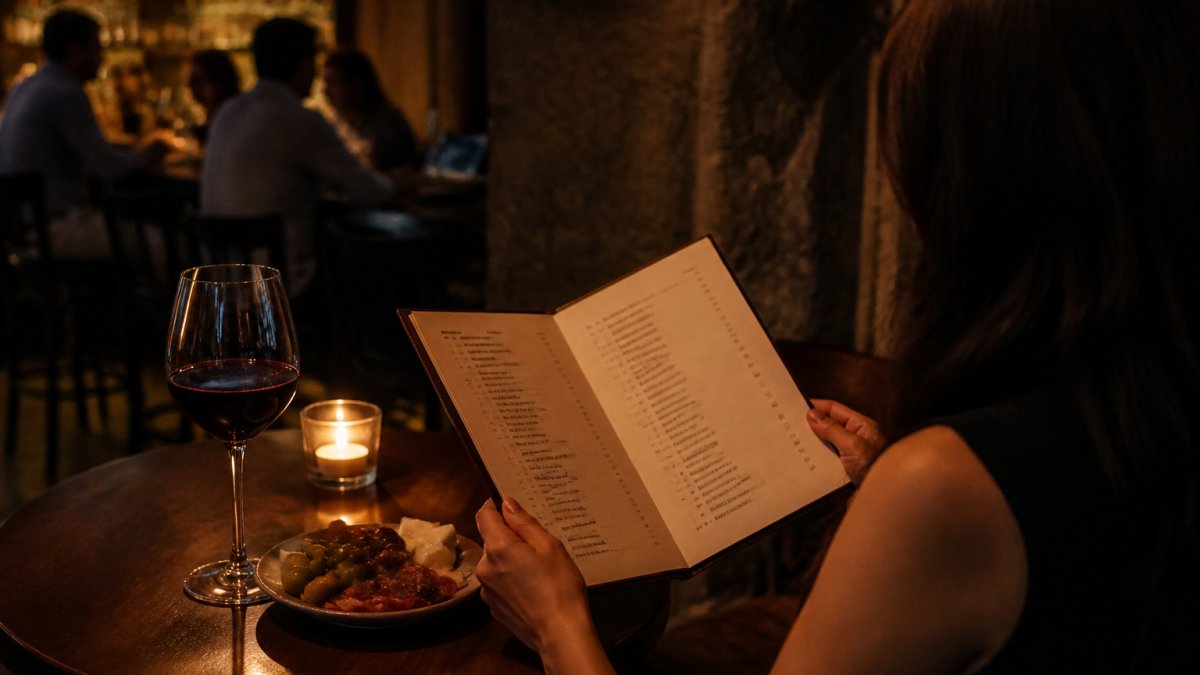
Read the list in three passes. First, scan for grape varieties and wine regions you already like. Second, look at the by-the-glass column for anything unfamiliar but adjacent, a different grape from a region you trust. Third, ask about the tasting flight if the bar offers one, which lets you try three pours instead of committing to one. Readers who want guided tasting rather than ordering blind can book a wine tasting.
Watch out: the cheapest by-the-glass pour is often the least interesting thing on the list. It exists to hit a price point, not to show off the cellar.
Finding the Best Wine Bars Near Me Without Relying on Star Ratings
Star ratings tell you whether people liked a place. They don’t tell you whether it’s the right place for you. A 4.6-star room can be a loud cocktail bar with three wines; a 4.1-star room can be the best glass-pour program in the neighborhood. The fix isn’t to ignore ratings, it’s to replace them with a repeatable evaluation method you can run in ten minutes, online or at the door.
A Five-Point Evaluation Method for an Unfamiliar Wine Bar
Use the same five checks every time, in this order. Score each one pass, mixed, or fail, and you’ll have a defensible answer before you commit an evening.
- List architecture. Count the by-the-glass pours and look at how they’re distributed. A serious program usually offers somewhere between 12 and 30 by-the-glass options, spread across sparkling, white, rosé, red, and something sweet or fortified. If 80% of the glass list is one color, the program is narrow. If the glass list is longer than the bottle list, the bar is built for turnover, not depth.
- Producer transparency. Good lists name the producer, the region, the grape, and often the vintage. A listing that says only “Chardonnay” or “Red Blend” is hiding something, usually that the wine is bulk-sourced. Look for at least a region and a producer on every line.
- Service signal. Ask one question: “What’s pouring well tonight, and what would you pair it with?” A specific answer with a grape, a region, and a food suggestion is a pass. A vague answer (“everything’s good”) or a recitation of the bestseller is a fail. This single question separates a curated bar from a pour-and-go operation.
- Glassware and temperature. Stemware behind the bar, and reds served at cellar temperature rather than straight from a hot shelf, tell you the wine is treated as wine. If every glass arrives in the same tumbler, the program is decorative.
- Room fit. Noise level, seating type, and whether the bar is built for a 45-minute stop or a two-hour linger. A bar with mostly high-tops and a loud playlist is a different product than one with banquettes and low music, and neither is wrong, you just need to know which one you’re walking into.
Reading Reviews and Photos Like an Editor
Once you have the method, use reviews and photos as evidence rather than verdicts.
- Read reviews for specifics, not scores. Search the review text for grape names, region names, pour sizes, and staff recommendations. A review that says “the staff walked me through a flight of Jura whites” is worth ten that say “great vibe.”
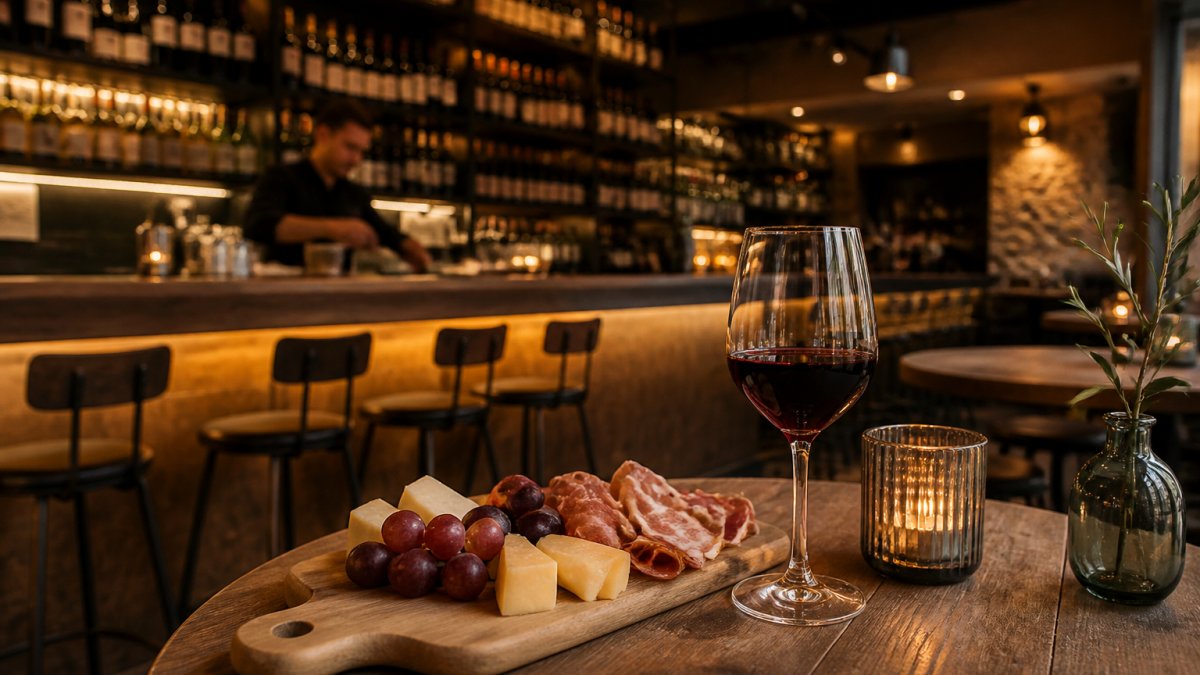
- Check the photos for glassware and seating. Bar stools, stemware, and a visible back bar tell you more than a marketing photo of a cheese board. Look for user photos rather than the venue’s own.
- Check the neighborhood. A wine bar that anchors a walkable block tends to have regulars, and regulars keep a list honest. A bar in a strip-mall pad with no foot traffic is more likely to depend on one-off visitors.
The Bar & Restaurant 2026 trend coverage notes that immersive tastings and curated flights are shaping how venues present wine right now. That’s a useful filter: a bar leaning into flights and guided pours is usually more serious about its list than one leaning on happy-hour volume.
If you’re choosing between two bars you’ve never visited, call ahead during a slow hour (mid-afternoon on a weekday) and ask what’s open by the glass. The answer tells you more about the program than any review.
Why a Wine Bar With Wine Flights Beats Ordering Blind
At good wine bars, a wine flight is three or more small pours served together, usually built around a theme like a grape, a region, or a style.
Ordering a full glass of something unfamiliar is a gamble. Flights also let a bar show range it can’t show one glass at a time, which is why a wine bar with wine flights tends to have a more adventurous list.
A common mistake is treating a flight as a sampler to rush through. Taste them side by side, take a note on each, and order a full glass of the one you’d want again.
Judging Value at Wine Bar Happy Hour
Value at happy hour isn’t the lowest number on the menu. It’s the ratio of what’s in the glass to what you paid, and the size of the plate next to it. To judge that ratio, you need a benchmark, otherwise every discount looks like a deal.
The Benchmarks to Carry in Your Head
Prices vary by market, but the relationships hold. Use these as rules of thumb, not absolutes.
- Standard pour size. A standard wine pour is 5 ounces. A bar pouring 4 ounces at the same price as a 5-ounce pour down the street is charging 25% more per ounce. Ask, or watch the pour.
- Glass-to-bottle ratio. A bottle holds roughly five 5-ounce pours. A by-the-glass price that is more than one-fifth of the bottle price means you’re paying a premium for the pour, which is normal, but worth knowing. A glass priced at one-sixth or less of the bottle is a genuine value.
- Happy-hour discount depth. A typical happy-hour discount runs 20% to 40% off the regular glass price. A discount deeper than half usually means the wine is being cleared, not showcased. A discount of 10% is barely a happy hour.
Three Questions That Settle It
- Is the discounted pour a wine worth drinking, or a brand nobody asked for? Look for a producer and a region on the happy-hour list. If the discounted wines are unnamed, the bar is discounting volume, not quality.
- Are the small plates genuinely tapas-sized or garnish? Ask how many pieces come on the plate, or check a user photo. A plate that feeds one person is a snack; a plate that feeds three is a reason to stay.
- Does the happy hour run long enough to be useful after work, or is it a 45-minute window that mostly serves the people who finish at four? A window that ends at 6 p.m. is a different product than one that runs to 7 or 8 p.m.
What a Good Happy Hour Looks Like
A good happy-hour program discounts wines that are already interesting, small-production, sustainable, or lesser-known regions, rather than dumping bulk wine. Sustainable farming and small-production wines are showing up more in wine-bar and restaurant offerings, per Bar & Restaurant’s 2026 industry coverage. A happy hour that discounts those bottles rather than dumping bulk wine is a good sign. Check the happy hour details before you commit an evening to it, and ask whether the discount applies to the whole glass list or only to a short happy-hour list.
A happy hour that discounts only the cheapest three wines is a marketing hour, not a value hour. Ask which wines are included before you order.
Picking a Wine Bar for Groups, Dates, and Work Meetups
The same room can be perfect for a date and wrong for a team offsite. Match the venue to the occasion before you match the wine.
| Occasion | What matters most | What to ask before booking |
|---|---|---|
| Date night | Intimacy, low noise, a corner table | Can we get a quiet table, and how loud is it on a Friday? |
| Work meetup | Reliable seating, wifi, easy splitting | Is there a table for six with room for laptops? |
| Group outing | Space, shared plates, a flight to anchor the table | Can you seat 10 and pour flights for the table? |
| Pre-dinner drinks | Speed of service, by-the-glass range | How fast can you pour for four before a 7pm reservation? |
A neighborhood bar with a curated selection handles dates well and groups poorly. For anything bigger than a casual table, ask about private events early, since a venue that can seat 40 comfortably is a different booking than one that can squeeze them in.
Book a Table in the Garden at Vino Locale
The final test of any wine bar is whether you’d come back without a reason.
For a downtown lunch, an after-work happy hour, or a team gathering, the garden gives you space that a barstool lineup can’t. Review the reservation and group policies before you commit.
Then order online for pickup or delivery if the office is where the evening is happening.
Frequently Asked Questions
What should you look for in a good wine bar?
Check four things: whether the by-the-glass list changes often, whether staff can explain a grape or region without reciting a script, whether the food menu is short but deliberate, and whether the room lets you hear the person across from you. A bar that rotates its open bottles is usually run by someone paying attention. There were 2,020 wine-bar businesses in the United States in 2026, per IBISWorld, so the difference between a good one and a forgettable one is rarely the size of the cellar.
How can you tell whether a wine bar has a well-curated wine list?
Look at the by-the-glass section first. A curated list offers a handful of pours across styles, red, white, sparkling, and something off the beaten path, rather than 30 options from three big brands. Check whether the same grape appears under two regions. A 2024 ethnographic study in the Journal of Wine Research found that restaurant professionals assess wine spaces through learned norms and practices, not just label prestige, so ask staff why a bottle made the list.
What is a wine flight, and is it a good way to try new wines?
A flight is a set of small pours, usually three to five, grouped by theme such as a grape variety, wine region, or wine style. It is the cheapest way to compare red wine against red wine or sparkling against sparkling without committing to a full glass. Flights are also the fastest way to learn what you actually like before ordering by-the-bottle.
How do you choose a wine bar for a casual date or group outing?
Match the room to the occasion. A date needs low noise, small tables, and a short walk to the bar. A group of eight or more needs reservable space, a food menu built for sharing, and enough staff to keep glasses filled. Ask about capacity before booking: some rooms handle 40 comfortably, others cram you in. For corporate gatherings, confirm wifi, a quiet corner for calls, and whether the venue hosts private events at all.
How can you find out whether a wine bar has happy hour?
Check the venue’s own website or social feed rather than a directory listing, since aggregator pages often carry stale hours. Call and ask two questions: which days happy hour runs and whether the discount applies to by-the-glass pours or only to bottles. A wine bar happy hour that discounts pours is more useful than one that only marks down bottles you were not going to order anyway. Confirm whether food is included or priced separately.
How much should you expect to spend at a wine bar?
Pricing depends on the pour size, the wine region, and whether you order food, so ask before you commit. Two questions settle it: what a standard pour costs and how many ounces it is. A satisfying wine experience comes from a full pour in a proper glass, not a thimble. If a bar will not tell you the pour size, that is your answer. Budget for tapas separately, and check whether flights are priced per person or per table.
Finding a wine bar you trust takes a little method and one good first visit. If you’d rather start with a room that has been getting it right since 2005, Vino Locale offers a garden setting, customizable wine and beer flights, tapas built for sharing, and space for private events up to 100 guests. Get started with Vino Locale and book a table in the garden for your next lunch, happy hour, or team gathering.
